Our Work
Education
Safe and effective places to learn
What we do
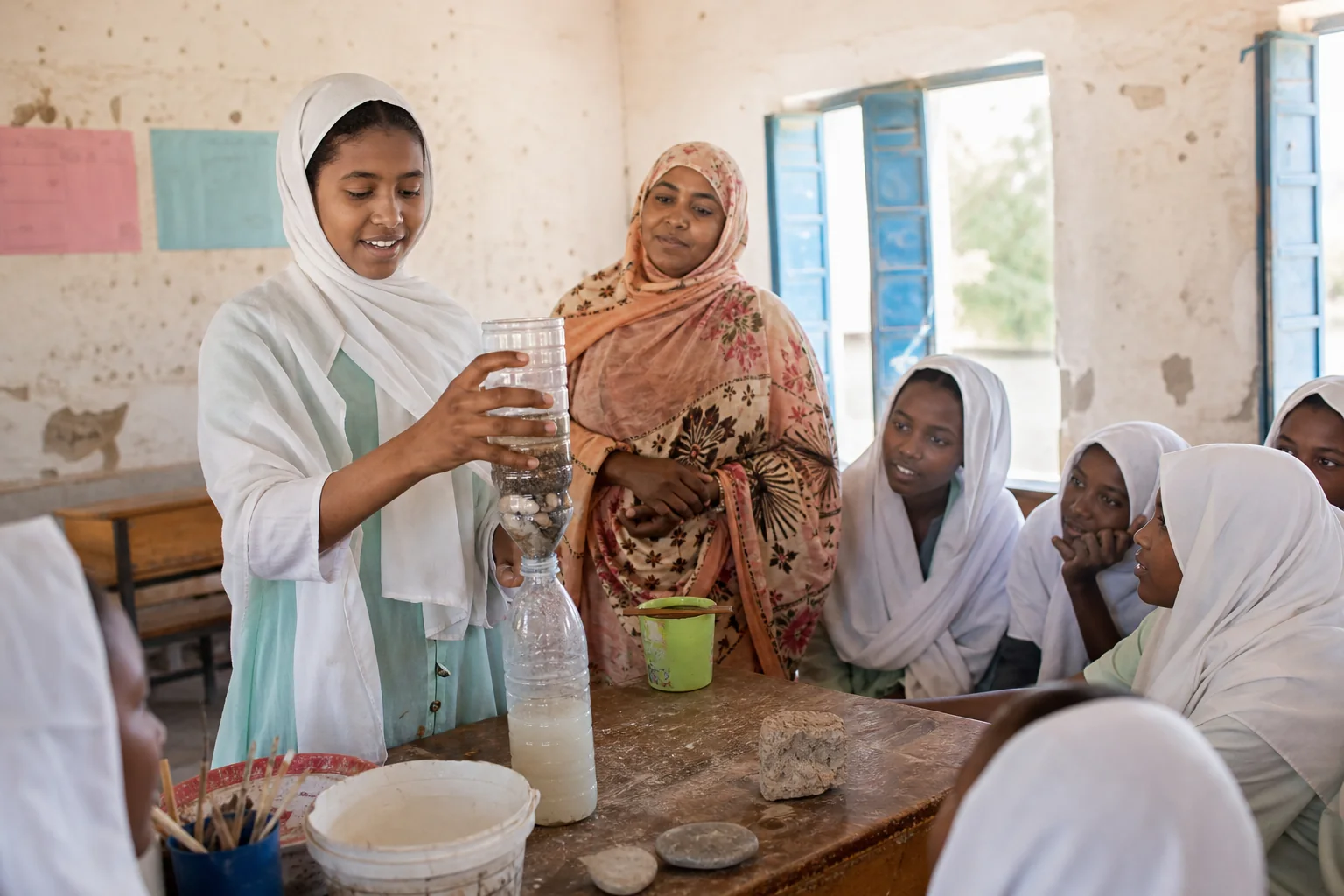
Conflict has weakened Sudan’s education system, limiting access and interrupting the regeneration of human capital. ARI’s response restores the physical learning environment and the capacity to run it.
- School rehabilitation — repairing damaged facilities and upgrading them to safe standards, with resilient retrofit where conditions allow.
- Learning materials — equipping schools with the materials teaching actually requires.
- Teacher training — supporting the staff who keep schools functioning.
- Equitable access — placement and targeting decisions made across community groups, so that a restored school does not become another marker of who was included and who was not.
Pastoralist families have historically had limited access to education because of their mobile way of life. ARI’s semi-settled community model is designed to improve access to services without requiring full sedentarisation — preserving pastoralist livelihoods while opening a path to schooling.
Outputs: safe and effective learning environments. Outcomes: higher educational attainment rates.ARI Theory of Change
Pillar
Service & institutional recovery
Inputs
Materials and teachers
Activities
School rehabilitation and training
Theory of change
Outputs: safe and effective learning environments. Outcomes: higher educational attainment rates.ARI Theory of Change
Related articles and updates
No published items in this field yet.