Methodology
Not parallel tracks. One system.
Environmental recovery, community recovery and the strength of local institutions are interdependent parts of a single system.
An integrated philosophy
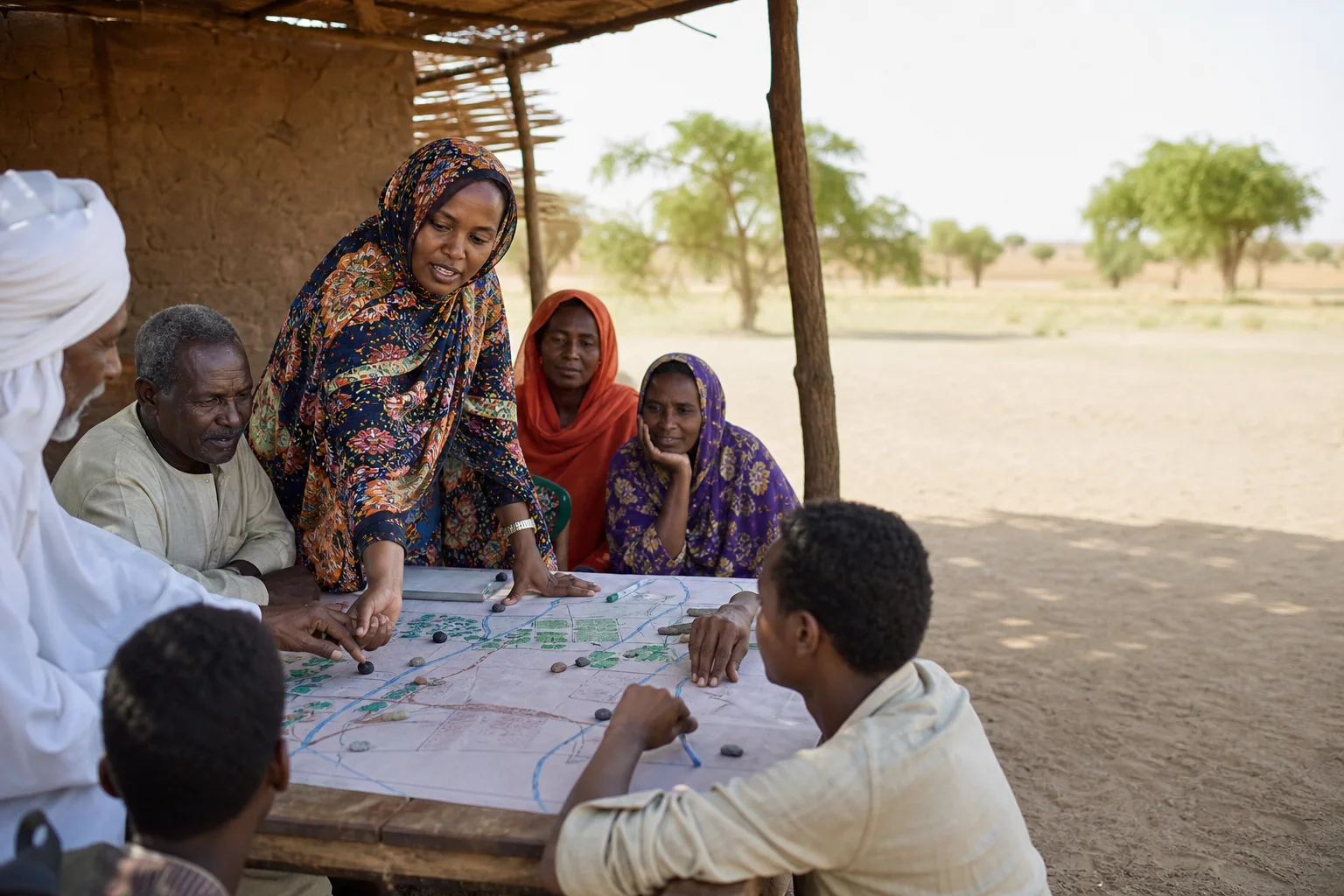
Africa Recovery Initiative operates on an integrated philosophy: environmental recovery, community recovery, and the strength of local institutions are not separate tracks but interdependent parts of a single system. Restoring land and natural resources builds the material foundation for stable livelihoods, which in turn allows communities to invest in building and managing their own institutions — rather than depending indefinitely on external support.
This methodology is built on converting short-term emergency interventions into sustainable development pathways, so that programs do more than meet immediate needs — they build the capacity of communities and institutions to continue and adapt long after a given intervention ends. Empowering local communities, particularly women and youth, sits at the center of this approach: as active leaders in planning and implementation, not simply as beneficiaries.
ARI also designs every development intervention to be conflict-sensitive, ensuring programs address the root causes of tension between groups rather than inadvertently deepening them. Investment, in this model, is treated as an economic lever rather than an end in itself — a practical resource that channels finance and investment partnerships toward social development and the long-term financial sustainability of the communities ARI works with.
In short
- Recovery is a system, not a set of parallel tracks
- Emergency response becomes a development pathway
- Women and youth lead, not just benefit
- Every intervention is conflict-sensitive
- Investment is a lever, not a goal
The Five Pillars
Interlocking components of a single strategy
The pillars are not parallel tracks. Progress in one creates the enabling conditions for the others: environmental stabilization protects livelihoods, which sustains community engagement, which strengthens institutions, which improves service delivery, which reduces grievances, which prevents conflict.
Service & Institutional Recovery
Focus: Restore core public services — health, education and water — upgrade infrastructure to safe standards, and rebuild local administrative and management capacities for sustained delivery.
- Rapid facility repairs and resilient retrofit
- Training for frontline staff and managers
- Systems support: supply chains, data and accountability
- Conflict-sensitive delivery with equitable access
Environmental Stabilization
Focus: Integrate nature-based solutions to reverse land degradation, improve water security, and protect the productive landscapes that underpin livelihoods and peace.
- Reforestation and agroforestry with native species
- Community water management and small-scale irrigation
- Land restoration, soil conservation and alternative livelihoods
- Mediation support for resource-based disputes
Community Development
Focus: Support meaningful local participation, build governance capacity, and create pathways for economic recovery that anchor people to peaceful, productive places.
- Participatory planning and community-driven projects
- Institutional strengthening for local NGOs and councils
- Livelihoods, skills training and market linkages
- Grievance-handling mechanisms linked to programming
Conflict-Sensitive Programmes
Focus: Analyse conflict dynamics before delivery and design every programme to reduce tensions, protect equitable access and avoid unintended harm.
- Conflict analysis built into programme design
- Equitable access across community groups
- Feedback and grievance-handling mechanisms
- Continuous monitoring of unintended effects
From Emergency Response to Sustainable Projects
Focus: Convert urgent interventions into durable systems that communities and local institutions can manage beyond the initial response.
- Plan for long-term operation from day one
- Build local skills, ownership and maintenance capacity
- Connect relief activities to livelihoods and services
- Use phased investment to sustain verified progress
Partnerships & Governance
How we work with others
ARI is committed to transparent governance, financial accountability and results-based management. All partnerships are governed by clear agreements that define roles, responsibilities and accountability mechanisms — ensuring that community interests remain central throughout implementation.
Local civil society
Implementing partners with community legitimacy and operational reach.
Government coordination
Alignment with ministries — including the Ministry of Forests — ensures policy coherence and scale, and protects programme continuity in complex operating environments.
Researchers and experts
Contextual evidence for adaptive design, conflict analysis and monitoring.
Development partners and donors
Flexible, multi-year funding to bridge humanitarian relief and durable recovery. Short funding cycles undermine exactly the sustained engagement that prevention requires.
Evidence-based action
We monitor, evaluate and adjust based on what actually works on the ground.ARI Core Values