
Our Work
Environment
Reversing desertification, one landscape at a time
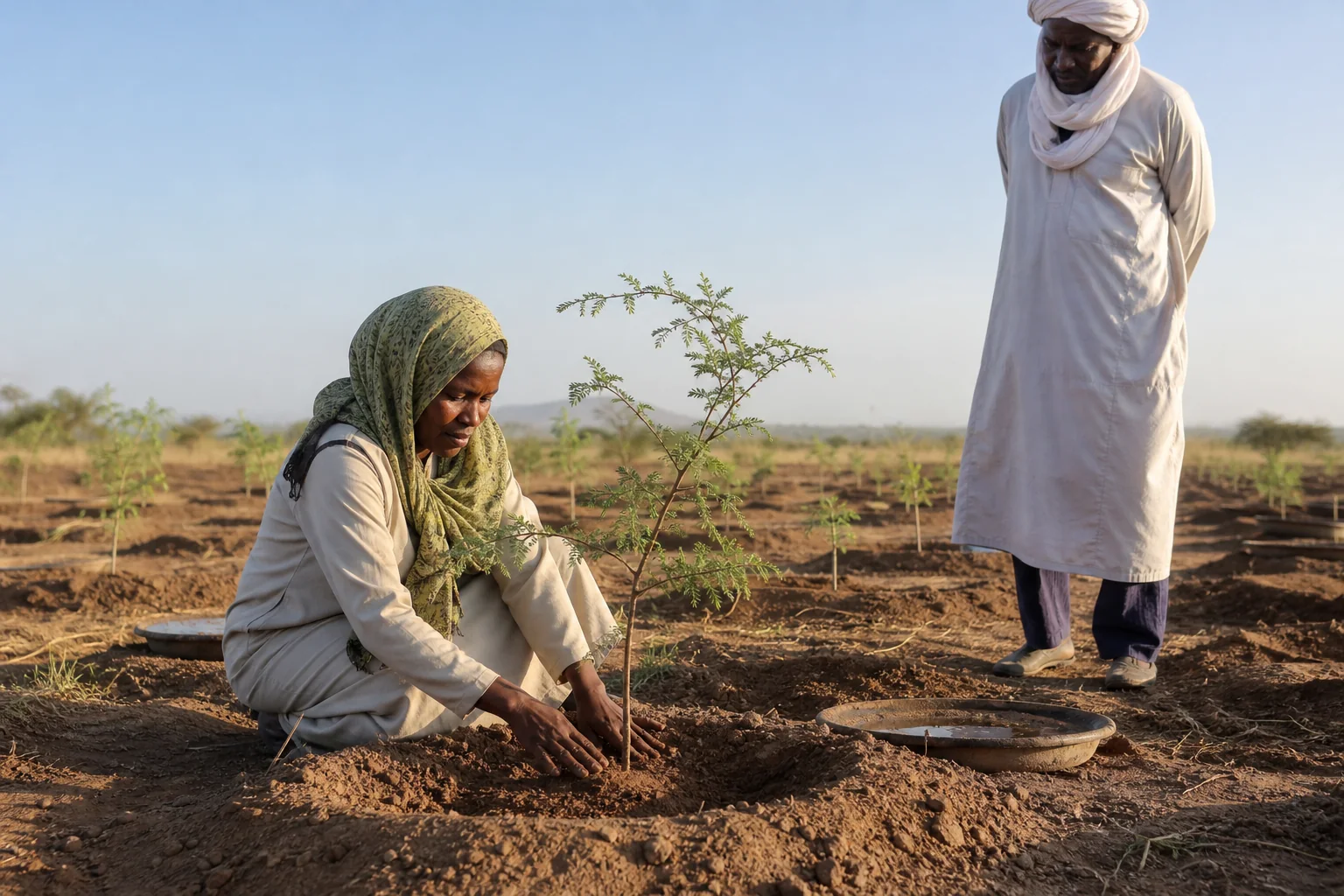
What we do
Desertification in the Sahelian belt is advancing steadily: vegetation cover is being lost, soils are degrading, and rangeland productivity declines year after year. ARI responds with dense, drought-adapted tree planting paired with the community infrastructure that makes restored land usable.
Our afforestation work is designed to integrate with the Great Green Wall — the African Union-backed initiative to restore degraded land and halt desertification along an 8,000-kilometre band stretching from Senegal to Djibouti. We mirror its core methodology: drought-adapted planting, rangeland restoration, and the integration of local communities as stewards of restored land rather than bystanders to a technical exercise.
Species selection
Six locally adapted species were selected for their combined role in combating desertification, restoring soil, providing windbreaks and supporting livestock fodder availability.
| Species | Share | Primary environmental function |
|---|---|---|
| Hashab (Acacia senegal) | 40% | Soil nitrogen fixation, erosion control |
| Haraz (Faidherbia albida) | 25% | Dry-season fodder availability, soil improvement |
| Samar (Acacia tortilis) | 15% | Windbreaks, sand stabilisation |
| Hijlij (Balanites aegyptiaca) | 10% | Drought-resilient cover, livestock fodder |
| Moringa (Moringa oleifera) | 5% | Fast-establishing cover, nutritional value |
| Sidr (Ziziphus mauritiana) | 5% | Windbreaks, soil stabilisation |
Haraz plays a particularly valuable role: it sheds its leaves during the rainy season, so it does not compete with grazing land productivity, and produces its most nutritious fodder pods during the dry season, when rangelands are at their most depleted — directly easing the seasonal fodder gap that drives pastoralist migration.
At full scale
- 500,000 trees established
- 20,000 hectares restored
- 168,000 tonnes CO₂e sequestered over 20 years
- Six drought-adapted native species
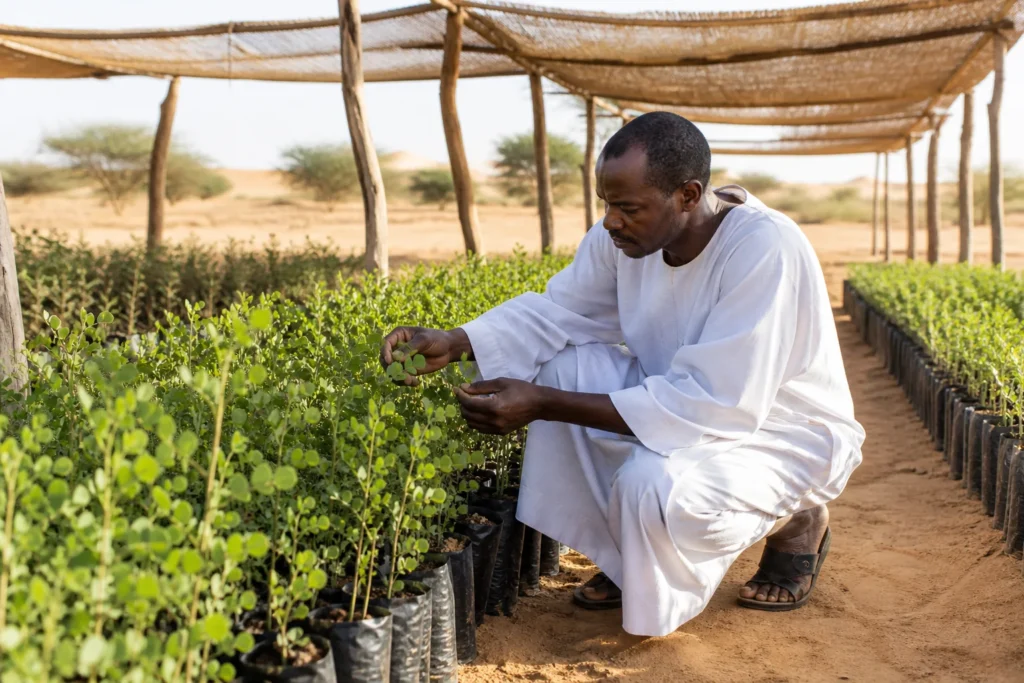
Where the trees begin
Seedlings raised locally
Planting at this scale depends on nursery capacity close to the site. Seedlings of hashab, haraz and samar are raised and checked locally, which shortens transport, improves survival rates, and keeps the skilled work inside the community.
Related articles and updates
No published items in this field yet.