Somalia: As Water Runs Short and the Land Grows Weary, Where Does Recovery Begin?
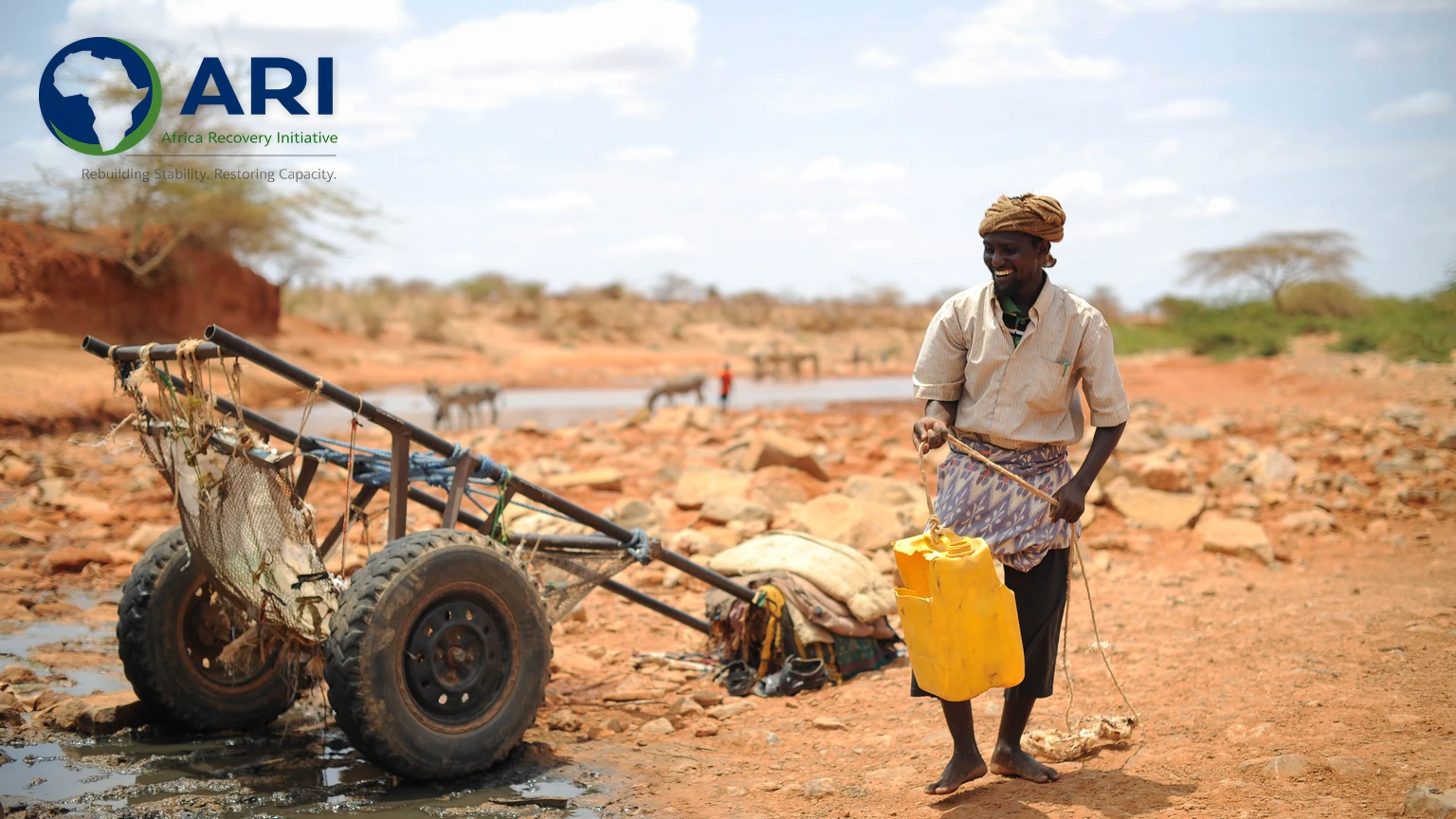
Drought is not only a set of numbers. In Somalia’s pastoral areas, a day can begin with a simple but heavy question: where will we find water for the household and the herd? When a well is far away or runs dry, a family may travel a long distance, spend a greater share of a limited income on water, or move in search of another source.
Those daily choices are the human face of a crisis shaped by erratic rainfall, stressed land and limited services. When pasture declines, people lose more than a natural resource: livestock health, income and food are affected, and families have fewer options to fall back on.
When water becomes a daily decision
In November 2025, the UN Office for the Coordination of Humanitarian Affairs (OCHA) reported that in Waajid district, Bakool region, the price of a 200-litre barrel of water had risen from about US$0.50 to US$1.70. The increase may look small when considered as a single purchase. Repeated day after day, it takes a growing share of a household’s budget and makes it harder to keep livestock alive.
The latest Integrated Food Security Phase Classification (IPC) analysis, published in autumn 2026, shows how wide the pressure has become: about 5.1 million people faced Crisis-level food insecurity or worse between July and September, and the number is projected to reach 5.4 million between October and December. These are food-security figures, not a count of everyone affected by drought. The crisis now overlaps with the risk of heavy rain and flooding during the Deyr season, making preparedness for both too little and too much water part of recovery.
Land, water and livelihoods are connected
Somalia’s 2019 submission to the United Nations Convention to Combat Desertification estimated that about 23.29 million hectares of land were degraded—36.86 per cent of the country’s total area. The country’s first updated national report to the UN climate convention recorded a decline in forest cover from about 12 per cent in 2000 to 10 per cent in 2016. The same report said that firewood and charcoal accounted for around 85–90 per cent of energy used in rural areas. These are dated reference figures, but they show how land management, energy and livelihoods intersect.
Groundwater is not easy to access everywhere. A British Geological Survey review, drawing on FAO-SWALIM work, notes that about 95 per cent of people rely on groundwater for drinking, and that most boreholes are 90–250 metres deep. Water quality and salinity also vary. Drilling a new borehole is therefore not an automatic solution: it needs site and water assessments, along with an operating and maintenance plan the community can sustain.
The pressures reinforce one another. Less water weakens pasture; degraded land makes it harder for a household to maintain its herd and income. People may have to move or rely more heavily on natural resources that are already under strain. Emergency assistance matters, but it cannot carry recovery on its own. Nor can tree planting succeed if water, services and viable livelihoods are missing.
Where can recovery begin?
The Africa Recovery Initiative (ARI) approach treats land restoration, essential services and livelihoods as connected work led by local communities. In Somalia, that could mean exploring four areas, after local assessment and consultation:
- Plan water carefully: carry out hydrogeological checks on depth and quality before drilling, and account for energy, operation and maintenance costs from the start.
- Manage shared rangelands fairly: agree routes and shared resources with pastoralists and farmers, protecting vegetation while keeping access to pasture open.
- Reduce pressure on trees through livelihoods: support locally appropriate income and energy options so that cutting trees is not the quickest way to meet daily needs.
- Start small and learn: test water reliability, plant survival, operating costs and community fit at a limited site, then expand only if the results support it.
This approach does not assume that solutions should come from outside, or that one project can fit every place. The families and communities who depend on land and water understand their resources, seasons and routes. A partner’s role is to listen and work alongside them, not make decisions on their behalf.
ARI is not claiming to have an active project in Somalia. This is a framework to adapt only after field research, local partnership and careful attention to safety and context. The question drought leaves us with is not simply how to plant a tree, but how to create the conditions for water, land and livelihoods to recover together.